What Are the Top Small Electric Motors for Global Buyers?

Time:2026-09-23 Author:Charlotte
0%

Global buyers need more than a compact motor with an attractive price. They need predictable performance, stable supply, and dependable technical support. This guide explores the leading Small Electric Motor options for appliances, automation equipment, medical devices, pumps, fans, and portable tools. Each application creates different demands for torque, speed, noise, heat control, and operating life.

In real procurement projects, brushed DC motors often suit simple, cost-sensitive devices. Brushless DC motors provide longer service life and quieter operation. Stepper motors offer accurate positioning without complex feedback systems. Small AC motors remain useful for fans, pumps, and fixed-speed equipment. The best choice depends on load behavior, duty cycle, available voltage, installation space, and maintenance expectations.

Details matter. A motor that fits a 40-millimeter housing may still fail under continuous heat. A low-noise model may require a more expensive controller. Buyers should review winding data, shaft dimensions, insulation class, bearing quality, efficiency, and protection ratings. They should also confirm production capacity, sample testing, documentation, and after-sales response.

No single motor wins every application. That is the uncomfortable part. Supplier claims may sound precise, yet real results can change with gearboxes, controllers, ambient temperature, and assembly quality. Reliable decisions require verified samples, clear testing methods, and communication with experienced engineers. This overview compares practical motor categories and explains which features deserve attention before global buyers commit to a supplier. Small details can decide large outcomes.
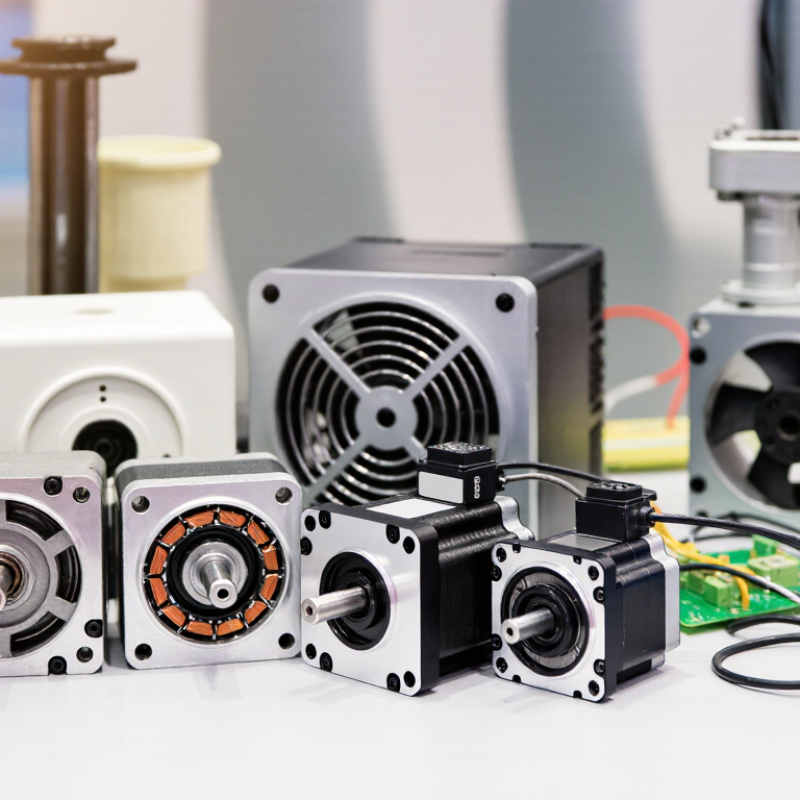
What Are the Top Small Electric Motors for Global Buyers?

Defining Small Electric Motors and Their Main Applications

What Are the Top Small Electric Motors for Global Buyers?

Small electric motors are compact electromechanical devices that convert electrical energy into controlled rotation. Their size can vary, but their working role remains practical: driving movement inside equipment with limited space. Common types include brushed DC, brushless DC, stepper, and small induction motors. Each design offers different speed control, torque, noise levels, and maintenance needs.

These motors operate fans, miniature pumps, automated valves, office equipment, medical devices, toys, and vehicle accessories. A brushless motor often suits applications requiring quieter operation and longer service life. A stepper motor supports measured movement in printers, scanners, and positioning systems. Small DC motors can provide simple, affordable motion, though their brushes may wear over time. In field testing, the first motor selected is not always the best one. Starting torque, heat, voltage changes, and continuous duty can expose weaknesses later.

Tips: Check torque at the real working speed, not only the advertised maximum. Confirm shaft dimensions, mounting holes, insulation, noise limits, and expected operating hours. Ask for test data under load. It is also wise to review applicable electrical safety and environmental requirements for the destination market. A motor may fit perfectly but still perform poorly in dust, humidity, or repeated starts. Consider control compatibility, replacement availability, and shipping protection before placing a large order. Small details matter.

Comparing Motor Types, Power Ratings, and Performance Features

For global buyers, the best small electric motor depends on load, speed, duty cycle, and available power. The International Energy Agency estimates that electric motor systems consume about 40% of global electricity. Small efficiency gains therefore matter, especially in pumps, fans, conveyors, and compact appliances.

Brushed DC motors remain affordable and simple for intermittent motion. They suit low-power devices, but brush wear limits service life. Brushless DC motors offer quieter operation, stronger efficiency, and better speed control. They are practical for battery equipment and precision fans. Induction motors tolerate harsh environments and support continuous duty, although they may need more starting current. Synchronous motors deliver accurate speed, but their control systems can increase purchase cost.

Power ratings need careful interpretation. A 30-watt motor may run a light fan, but it may fail during startup under high friction. Measure peak torque, not only rated watts. The U.S. Department of Energy’s Motor Systems Market Assessment reports that motor-driven equipment uses roughly 68% of industrial electricity in the United States. This supports paying attention to efficiency, even at modest power levels. However, published efficiency figures often exclude the controller, gearbox, and heat losses.

In field checks, I examine temperature after one hour, vibration at the mounting point, and current during startup. Look for duty ratings, insulation class, IP protection, noise data, and voltage tolerance. IEC efficiency classifications help comparison, but testing conditions still vary. I would not choose the highest-rated motor automatically; sometimes it is oversized, inefficient at light load, or difficult to service.

Top Small Electric Motors for Global Buyers

Representative reference values for commonly selected small motor types. Actual performance varies with motor size, duty cycle, voltage, cooling, load, and control method.

Brushless DC motors generally provide high efficiency and long service life, while stepper motors offer precise positioning. Induction motors are robust for continuous operation, and brushed DC or universal motors remain practical where low cost and simple control are priorities.

Evaluating Voltage, Efficiency, Control, and Environmental Requirements

What Are the Top Small Electric Motors for Global Buyers?

Voltage compatibility is the first practical check when selecting a small electric motor.

A 12-volt motor suits battery equipment, while 24 or 48 volts can reduce current in mobile systems. Alternating-current models may require 110, 230, or 400 volts, depending on the installation.

Buyers should confirm voltage tolerance, starting current, frequency, and connector design. A motor that runs well in a laboratory may struggle during cold starts or unstable grid conditions.

Efficiency needs careful measurement.

Do not judge it from no-load performance alone. Test the motor near its real operating load, where heat, torque, and speed affect energy use. A high-efficiency motor can lower battery consumption and reduce cooling needs.

Control requirements matter too. Basic applications may need only on-off switching, but variable-speed systems often require PWM, a driver, or feedback from an encoder.

Smooth acceleration protects gears and prevents sudden current spikes. Control systems also need electrical noise testing. This step is often ignored.

Environmental conditions can change the correct choice completely.

Check dust, water exposure, humidity, vibration, ambient temperature, and installation altitude.

Sealed housing helps, but excessive sealing can trap heat. That trade-off deserves attention. In coastal equipment, corrosion-resistant materials may matter more than a small efficiency gain.

Certification and test records should match the target market, not merely appear on a sales sheet.

A spreadsheet can look convincing, yet field testing may reveal noise, overheating, or unstable speed. Leave room for that uncomfortable possibility.

Reviewing Leading Small Motor Options for Different Global Markets

Small electric motors vary widely in efficiency, torque, noise, and service life. For global buyers, the right option depends on the application and local operating conditions. A compact brushed motor suits window systems, pumps, and low-cost appliances. It offers simple control and affordable replacement parts. However, brush wear can become a problem in equipment running several hours daily. Brushless motors provide longer service life and quieter operation. They also require compatible electronic control. That adds cost.

Market conditions strongly influence motor selection. In humid Southeast Asian equipment, sealed housings and corrosion-resistant shafts deserve close attention. In colder northern regions, grease viscosity and starting torque become more important. European industrial buyers may prioritize efficiency data, noise limits, and documented conformity. Buyers in emerging markets often value repairability and stable supply more than maximum efficiency. Both views are reasonable. A motor that performs well in a laboratory may struggle with dust, voltage fluctuations, or poor ventilation.

A reliable review should examine rated voltage, load profile, duty cycle, temperature rise, and expected maintenance. Ask for test reports, not only catalogue figures. Check whether the motor can start under real load. This detail is often missed. I have also seen purchasing teams choose a smaller motor to reduce price, then face overheating and early failure. That decision saves money briefly. It may increase total cost later. Engineers should test samples for noise, vibration, current draw, and restart performance before approving large orders.

Selecting Suppliers Based on Quality, Compliance, Cost, and Support

Global buyers are comparing more than motor size and purchase price. The International Energy Agency reports that electric motor systems consume about 53% of global electricity. Efficiency and reliability therefore affect operating budgets for years. For compact equipment, BLDC, brushed DC, stepper, and induction motors each suit different load profiles. A supplier should provide measured torque, speed, thermal rise, noise, vibration, and efficiency data. Catalog claims alone are not enough.

Quality begins with repeatable production. Request inspection records, material traceability, bearing-life evidence, and sample testing under your actual duty cycle. IEC 60034 provides a useful reference for motor performance and testing. ISO 9001 certification supports process control, but it does not guarantee every shipment. MarketsandMarkets estimates the small electric motor market could grow from about USD 16.7 billion in 2023 to USD 23.1 billion by 2028. Rapid growth may increase capacity pressure and inspection risks. That part is easy to overlook.

Compliance must match the destination and application. Ask for current technical files, restricted-substance declarations, electromagnetic compatibility evidence, and applicable safety approvals. Requirements differ across regions, so one certificate rarely covers every market. Cost comparisons should include tooling, minimum order quantities, rejection rates, energy use, shipping, and warranty handling. A cheaper motor can become expensive after field failures. Supplier support matters during ramp-up: clear response times, engineering-change notices, replacement availability, and failure-analysis reports are practical tests. I would also audit communication quality before signing. It is not a perfect predictor, but silence during sampling usually becomes slower support after production.

What Are the Top Small Electric Motors for Global Buyers? - Selecting Suppliers Based on Quality, Compliance, Cost, and Support

Motor Type Typical Small-Motor Application Typical Power Range Typical Speed Range Key Strengths Main Limitations Typical Efficiency Indicative Unit Cost at Volume* Quality Checks for Supplier Evaluation Common Compliance Considerations Best Support Requirements Overall Buyer Fit
Brushed DC Motor Small pumps, fans, toys, valves, locks, portable devices, and battery-powered equipment 1–100 W 3,000–20,000 rpm, depending on winding and load Low initial cost; simple control; high starting torque; readily available in many frame sizes Brush and commutator wear; electrical noise; shorter service life in continuous-duty applications 60–85% US$1–8 Brush life, commutator surface, no-load current, locked-rotor current, torque, vibration, noise, and endurance testing EMC requirements, electrical safety, RoHS/REACH obligations where applicable, and transport battery requirements for integrated products Winding customization, brush-grade selection, sample testing, replacement-part availability, and clear operating limits Cost-sensitive, intermittent-duty products
Brushless DC Motor Cooling fans, medical equipment, robotics, appliances, pumps, drones, and precision motion systems 5–500 W 1,000–50,000 rpm, depending on design and controller Longer operating life; low maintenance; high power density; good speed control; reduced mechanical wear Requires an electronic controller; higher system cost; electromagnetic compatibility needs careful design 75–92% US$4–25 Rotor balance, Hall-sensor accuracy, back-EMF consistency, thermal rise, bearing life, controller compatibility, and acoustic testing EMC and low-voltage safety requirements for the complete motor-controller system; RoHS/REACH documentation where applicable Firmware and controller support, parameter files, thermal design assistance, tuning, failure analysis, and lifecycle continuity High-volume and continuous-duty applications
Permanent-Magnet Synchronous Motor Compact compressors, efficient pumps, HVAC actuators, automation equipment, and energy-saving appliances 20–750 W 500–6,000 rpm High efficiency; strong torque density; stable operation; suitable for demanding duty cycles Higher magnet and control cost; requires a compatible inverter or drive; demagnetization risk at excessive temperature 80–95% US$12–60 Magnet retention, rotor integrity, torque ripple, thermal endurance, insulation system, efficiency mapping, and drive matching EMC, electrical safety, material restrictions, energy-efficiency requirements, and product-specific market regulations Application engineering, inverter parameterization, thermal modeling, efficiency reports, and long-term magnet supply planning Efficiency-focused equipment
Stepper Motor 3D printers, CNC equipment, laboratory instruments, camera systems, textile machinery, and positioning mechanisms 5–300 W 0–2,000 rpm; torque generally decreases as speed rises Accurate incremental positioning; high holding torque; simple open-loop control; repeatable motion Can resonate; may lose steps under overload; audible noise and heat generation can be significant 50–85% US$5–35 Step-angle accuracy, holding torque, detent torque, temperature rise, insulation resistance, shaft runout, and vibration EMC and low-voltage requirements for the motor-drive assembly; machinery safety requirements for the final machine Motion-profile advice, driver compatibility, acceleration testing, shaft and connector customization, and application samples Positioning and indexing systems
Servo Motor Industrial automation, packaging equipment, robots, inspection systems, and high-accuracy actuators 50 W–1 kW 1,000–6,000 rpm Closed-loop accuracy; rapid response; high dynamic performance; overload capability; precise torque control Higher purchase price; encoder and drive integration required; commissioning is more complex 80–95% US$30–180 Encoder resolution, position repeatability, overload performance, thermal rise, bearing life, braking response, and vibration Machinery, EMC, electrical safety, functional safety, and regional industrial control requirements may apply to the complete system Commissioning tools, communication-protocol support, replacement encoder policy, troubleshooting response, and training Precision and high-dynamic motion
AC Induction Motor Fans, pumps, compressors, conveyors, small machinery, and general-purpose equipment connected to an AC supply 25 W–1 kW 900–3,600 rpm at 50/60 Hz, depending on pole count and slip Rugged construction; mature technology; low maintenance; broad global availability; suitable for continuous operation Lower power density than many permanent-magnet designs; speed control normally requires a variable-frequency drive 65–90% US$10–75 Insulation resistance, dielectric strength, efficiency, temperature rise, bearing noise, vibration, starting current, and overload endurance Regional electrical safety, EMC, energy-efficiency rules, motor marking, and environmental substance restrictions Voltage and frequency configuration, duty-cycle guidance, mounting compatibility, spare bearings, and service documentation Robust fixed-speed equipment
Universal Motor Handheld power tools, vacuum cleaners, blenders, mixers, and compact high-speed appliances 100–1,500 W 5,000–30,000 rpm High speed and high power-to-weight ratio; operates on AC or DC; relatively compact Brush wear, acoustic noise, electromagnetic interference, and lower efficiency than many brushless alternatives 50–80% US$5–35 Commutator durability, brush life, overspeed, stall performance, noise, vibration, thermal rise, and conducted emissions Electrical safety, EMC, appliance or tool-specific standards, RoHS/REACH obligations where applicable, and regional plug requirements Noise reduction, brush replacement planning, EMC troubleshooting, thermal validation, and product-specific safety testing Compact high-speed appliances
Shaded-Pole Motor Small fans, air circulators, refrigerator evaporators, displays, and low-cost household appliances 1–40 W 1,000–3,000 rpm Very simple construction; low purchase cost; reliable in basic single-phase applications Low efficiency; low starting torque; limited speed control; generally unsuitable for high-performance equipment 20–50% US$2–12 Starting torque, temperature rise, winding consistency, bearing performance, stall endurance, noise, and dimensional inspection Electrical safety, appliance-specific requirements, EMC, energy-efficiency rules where applicable, and material declarations Stable tooling, consistent laminations, noise control, long-term production capacity, and packaging protection Lowest-cost, low-power products
Coreless DC Motor Portable medical devices, miniature pumps, camera mechanisms, precision instruments, and lightweight actuators 0.1–20 W 2,000–30,000 rpm Low rotor inertia; rapid acceleration; compact size; good controllability; suitable for short dynamic cycles Limited thermal capacity; sensitive to overload; usually higher cost per watt; requires careful mechanical integration 65–90% US$8–45 Commutation, rotor balance, start-stop endurance, thermal rise, shaft alignment, current draw, noise, and life-cycle testing EMC and electrical safety for the complete device; medical or laboratory-product regulations may apply to the final equipment Miniaturization support, custom winding, low-noise design, rapid prototyping, and engineering change control Compact precision equipment
*Indicative unit-cost ranges are typical planning estimates in US dollars for standard small motors purchased at volume. Actual prices vary with power, quantity, customization, controller or encoder requirements, certification, materials, tooling, shipping terms, and market conditions. Efficiency ranges are typical motor-level values and should be confirmed through supplier test reports for the specific model.

FAQS

How should I choose a small electric motor?

Match the motor to load, speed, duty cycle, and available power. A light fan needs less torque than a conveyor. Real conditions matter.

What is the difference between brushed and brushless motors?

Brushed motors are affordable and simple for intermittent motion. Brush wear limits their service life. Brushless motors run quieter and control speed more precisely. They require compatible electronics.

When is an induction motor a practical choice?

Induction motors suit harsh environments and continuous operation. They can need higher starting current. Check the power supply before selecting one.

Is a higher watt rating always better?

No. A 30-watt motor may run a light fan but fail under high startup friction. Check peak torque, not only rated watts. Bigger is not always wiser.

What efficiency details should buyers inspect?

Compare efficiency classifications, but examine the complete system. Controllers, gearboxes, and heat losses may be excluded from published figures. A motor can appear efficient on paper and perform poorly in use.

Which tests should be performed before a large order?

Test samples under the real load. Measure startup current, noise, vibration, temperature, and restart performance. After one hour, feel for excessive heat near the mounting point. I sometimes trust catalog data too much.

How do climate and local conditions affect motor selection?

Humid areas need sealed housings and corrosion-resistant shafts. Cold regions require suitable grease and strong starting torque. Dust, weak ventilation, and voltage changes can reduce performance. Laboratory results are not enough.

What specifications should appear in a motor review?

Review voltage, load profile, duty cycle, temperature rise, insulation class, and IP protection. Also check noise data and voltage tolerance. Confirm the motor starts under the actual load. This detail is often missed.

Conclusion

Choosing the right Small Electric Motor begins with understanding its size, operating principle, and intended application. These motors are widely used in automation equipment, home appliances, medical devices, pumps, fans, robotics, and compact industrial systems. Global buyers should compare motor types, rated power, speed, torque, noise, vibration, service life, and starting performance to ensure the motor matches the equipment’s workload and space limitations.

Other important factors include voltage compatibility, energy efficiency, control methods, thermal performance, and protection against dust or moisture. Buyers should also consider regional electrical requirements and operating environments before making a decision. The best motor option may differ between markets because of climate, power systems, usage patterns, and certification expectations. When selecting a supplier, evaluate product consistency, quality controls, compliance documentation, pricing transparency, delivery capability, customization options, warranty terms, and technical support. A balanced review of performance, reliability, total cost, and after-sales service can help global customers choose a dependable motor solution for both current needs and future production plans.

Charlotte

Charlotte

Charlotte is a seasoned marketing professional with a deep understanding of the company's portfolio and a passion for elevating its presence in the market. With a keen eye for detail and a commitment to excellence, she ensures that our professional blog is regularly updated with insightful articles......