Choosing a reliable Motor Controller supplier can shape a machine’s safety, efficiency, and service life. For global buyers, the decision involves more than product price or catalog size. Voltage range, continuous current, peak load, communication protocols, thermal protection, and software support deserve careful review.
This guide examines ten established suppliers serving industrial automation, electric mobility, robotics, marine equipment, and specialized machinery. Each company is considered through practical criteria, including engineering experience, manufacturing capability, quality management, regional support, customization options, and documented testing. Buyers should check whether a controller handles real operating conditions, not only laboratory specifications. A unit rated for 100 amps may behave differently inside a crowded cabinet at high ambient temperatures.
Look closely.
The comparison also considers delivery reliability, spare-part access, warranty terms, and technical communication across borders. Certifications can support purchasing decisions, but they do not replace application testing or professional installation. Product availability may change, and supplier strengths can vary by region, project size, and motor type. Therefore, this list should guide evaluation rather than serve as a permanent ranking.
Some details remain difficult to verify publicly. That matters. Buyers should request datasheets, sample units, test reports, firmware information, and references from comparable projects before signing a large contract. A thoughtful supplier will answer specific questions clearly and acknowledge limitations. The best choice is rarely the cheapest controller. It is the supplier that can support stable performance from initial design through maintenance and future expansion.
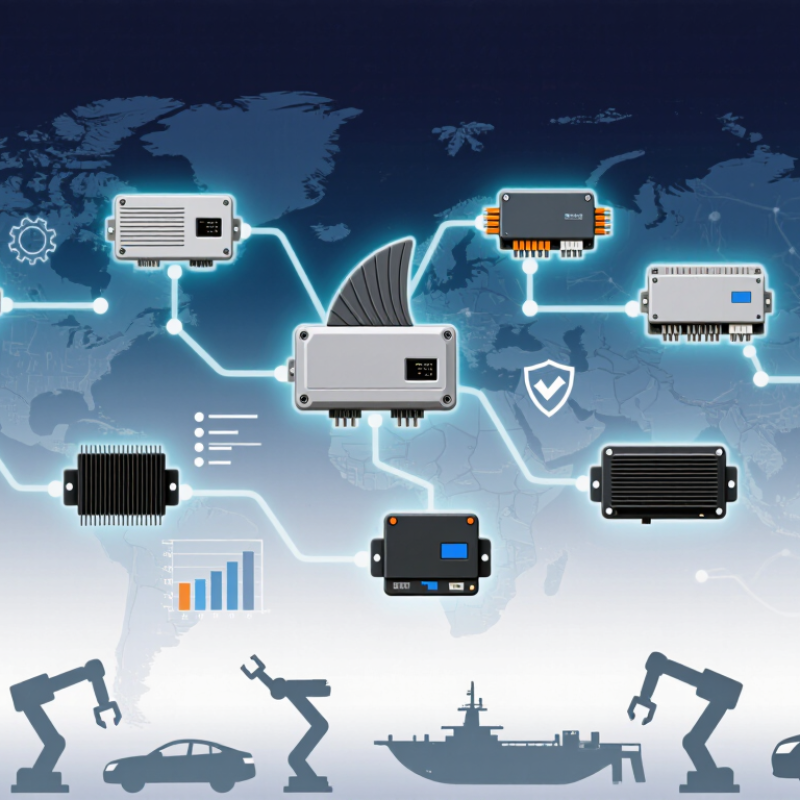
Motor controller suppliers connect electrical design with real-world motion systems. Their products regulate speed, torque, direction, and energy flow in machines. Typical product scopes include brushed DC, brushless DC, AC, servo, and stepper motor controllers. Some suppliers also provide gateways, sensors, cooling systems, and configuration software.
Experienced suppliers support more than component sales. They help buyers match voltage, current, duty cycle, feedback signals, and communication protocols. A controller rated for 48 volts may still fail under repeated peak loads. Thermal testing, enclosure checks, and overload protection deserve close attention. Technical datasheets should state continuous and peak current clearly. Vague figures create expensive mistakes.
Tips: Request sample units before placing volume orders. Test them with your actual motor, load, wiring, and operating temperature. Check firmware tools, wiring diagrams, certification documents, and replacement policies. Ask about production consistency and inspection records. Do not judge suppliers by price alone. A low-cost controller may require more filters, cooling, or engineering time. Even careful evaluations can miss field behavior. That is why pilot testing remains valuable. Suppliers with application engineers, traceable testing, and responsive documentation usually reduce integration risks for global buyers.
How to Evaluate Global Motor Controller Manufacturers
Selecting among the 10 best motor controller suppliers requires more than comparing prices. The International Energy Agency estimates that electric motor systems consume nearly 50% of global electricity. Small efficiency losses can therefore become major operating costs. Request verified efficiency curves, torque-speed data, thermal derating results, and standby consumption figures. A reliable manufacturer should also provide test records for EMC, insulation, vibration, and ingress protection. Claims without measured conditions deserve caution.
Manufacturing depth matters. Check whether the supplier controls firmware, power-stage testing, calibration, and final inspection. ISO 9001 certification supports process discipline, but it does not guarantee product quality. Ask for failure-rate data, batch traceability, repair procedures, and realistic delivery records. The U.S. Department of Energy reports that motor systems can represent over 70% of industrial electricity use. Service responsiveness is therefore a commercial issue, not a minor convenience. Regional technical support, spare-unit planning, and clear firmware update policies reduce downtime. My own evaluation would still leave uncertainty if field data covers only ideal factory conditions.
Tips: Build a weighted scorecard before requesting quotations. Give efficiency, safety, lifecycle support, and documented testing higher scores than cosmetic features. Ask for two customer references in similar climates. Review one failed-unit investigation. It often reveals more than a polished presentation. Also check compliance with applicable IEC, UL, or regional requirements, because certification scope may exclude the exact controller configuration you plan to purchase.
| Rank | Supplier Profile | Primary Region | Controller Focus | Typical Voltage Range | Typical Continuous Current | Motor Compatibility | Common Certifications | Typical Lead Time | Customization Capability | Evaluation Score |
|---|---|---|---|---|---|---|---|---|---|---|
| 1 | Supplier Profile A | East Asia | High-volume BLDC and PMSM controllers | 24–96 VDC | 30–200 A | BLDC, PMSM, three-phase AC | CE, RoHS, EMC testing | 4–8 weeks | Firmware, connectors, enclosure, CAN parameters | 9.4/10 |
| 2 | Supplier Profile B | North America | Industrial variable-frequency drives | 200–690 VAC | 5–800 A | Induction, PMSM, synchronous motors | UL, CSA, CE, IEC 61800 testing | 6–12 weeks | Control software, I/O, enclosure rating, networking | 9.2/10 |
| 3 | Supplier Profile C | Western Europe | Servo and precision motion controllers | 24–480 VAC/VDC | 3–120 A | PMSM, AC servo, brushless DC | CE, UKCA, RoHS, functional safety options | 6–10 weeks | Motion profiles, encoder interfaces, safety functions | 9.1/10 |
| 4 | Supplier Profile D | East Asia | Electric vehicle and light mobility controllers | 36–144 VDC | 50–450 A | BLDC, PMSM, induction motors | CE, RoHS, ISO 9001 manufacturing | 5–9 weeks | Regenerative braking, CAN, thermal protection, displays | 8.9/10 |
| 5 | Supplier Profile E | Southeast Asia | Compact controllers for appliances and automation | 12–72 VDC | 5–80 A | BLDC, brushed DC, PMSM | CE, RoHS, FCC or EMC compliance | 3–7 weeks | PCB layout, software parameters, cable assemblies | 8.7/10 |
| 6 | Supplier Profile F | Central Europe | Heavy-duty industrial motor control systems | 230–690 VAC | 10–1,200 A | Induction, synchronous, wound-rotor motors | CE, IEC 61800, ISO 9001, local electrical approvals | 8–16 weeks | Cabinet integration, harmonic mitigation, fieldbus systems | 8.6/10 |
| 7 | Supplier Profile G | South Asia | Cost-sensitive industrial and agricultural drives | 24–480 VAC/VDC | 10–300 A | AC induction, BLDC, brushed DC | CE, RoHS, selected regional approvals | 5–10 weeks | Voltage, current, keypad, enclosure, communication options | 8.4/10 |
| 8 | Supplier Profile H | North America | Robotics, AGV, and mobile automation controllers | 24–120 VDC | 20–250 A | BLDC, PMSM, servo motors | UL, CE, RoHS, EMC compliance | 6–12 weeks | EtherCAT, CANopen, encoder feedback, safety I/O | 8.3/10 |
| 9 | Supplier Profile I | Eastern Europe | HVAC, pump, fan, and compressor drives | 200–480 VAC | 3–400 A | Three-phase induction and PMSM motors | CE, EMC, IEC 61800, RoHS | 6–11 weeks | PID control, bypass panels, sensor integration, fieldbus | 8.2/10 |
| 10 | Supplier Profile J | Western Europe | Low-voltage controllers for commercial equipment | 12–60 VDC | 5–60 A | BLDC, brushed DC, small PMSM | CE, RoHS, EMC testing | 4–9 weeks | Compact housing, connectors, firmware, thermal limits | 8.0/10 |
Note: Voltage, current, lead-time, and certification ranges are indicative market-screening benchmarks. Buyers should verify current specifications, test reports, production capacity, and regulatory approvals directly before placing an order.
International buyers need more than a low unit price when choosing motor controller suppliers. The top ten suppliers usually cover distinct needs: compact DC drives, BLDC controllers, AC inverters, servo systems, and heavy-duty industrial units. Their value appears in tested performance, stable communication protocols, and responsive engineering support. Ask for thermal curves, efficiency data, wiring diagrams, firmware controls, and sample reports. A clear document trail builds trust across borders.
A reliable supplier should explain voltage ranges, overload protection, cooling methods, and expected service life. Request a 48-volt, 20-amp sample when that matches your application. Run it inside a cabinet, near the expected ambient temperature, and record heat at the terminals.
Check startup behavior, noise, fault recovery, and communication stability. Strong international suppliers also provide export packaging, traceable quality records, installation guidance, and region-specific compliance documents. Their engineers should answer technical questions without hiding behind sales language.
Payment terms, minimum order quantities, replacement procedures, and delivery reliability also deserve attention. A supplier with local service partners can reduce downtime after installation. However, supplier rankings can mislead. A large factory may overlook a small engineering change. A smaller specialist may lack spare-stock capacity. No supplier is perfect. One overlooked detail, such as an incompatible connector, can delay an entire production line. Compare evidence from samples, audits, references, and realistic production trials before approving a long-term purchase.
Choosing among the 10 Best Motor Controller Suppliers for Global Buyers requires more than comparing price and rated current. The International Energy Agency’s Energy Efficiency 2023 report states that motor-driven systems consume roughly half of industrial electricity. Efficiency, thermal stability, and controllability therefore affect both operating cost and equipment life. Look for field-oriented control, regenerative braking, sensorless operation, and rapid fault diagnostics. These technologies matter most when loads change quickly.
Certification evidence should be specific. Suppliers should provide ISO 9001 quality records, IEC 61800-5-1 electrical safety testing, and IEC 61800-3 electromagnetic compatibility results. For machinery, ISO 13849 performance validation may also be relevant. The IEA’s Global EV Outlook 2024 recorded nearly 14 million electric car sales in 2023, showing why scalable controller production and testing capability matter. However, a certificate alone proves little about long-term field performance. Ask for test conditions, revision dates, failure data, and traceable serial records.
Customization separates capable suppliers from catalog resellers. Useful options include input voltage, peak current, enclosure rating, cooling method, braking resistor support, communication protocols, and firmware limits. Request a thermal map, efficiency curve, and sample unit before approving volume production. In practice, a controller rated for 100 amps may deliver that current only briefly. That detail is easy to miss. Supplier comparisons should also examine local service, spare-part continuity, software access, and change-control discipline. The selection process is rarely perfect; engineers should document assumptions and revisit them after pilot testing.
Selecting a motor controller supplier is not a popularity contest. Your application sets the real test. Check motor type, rated current, overload capacity, control method, voltage range, and operating temperature. A dusty factory, refrigerated warehouse, and outdoor pump station need different protection levels.
The International Energy Agency estimates that electric motor systems consume nearly half of global electricity. The U.S. Department of Energy’s Motor Systems Market Assessment also found that motor-driven equipment uses about 68% of industrial electricity in the United States. Efficiency matters. So does dependable control. Ask suppliers for efficiency test conditions, thermal data, fault records, and lifecycle support. Demand evidence. Not just brochures.
Market requirements can change the decision. Confirm certifications, documentation, language support, warranty terms, spare-part access, and local technical response. A controller designed for one grid may perform poorly on another. A low purchase price can become expensive after customs delays, software restrictions, or repeated field visits. I have learned that a technically excellent unit can still fail commercially when support is distant. My own evaluation habit is not perfect; I sometimes overvalue efficiency and undervalue response time. Build a sample test with the actual motor, cable length, load profile, and enclosure. Then measure heat, noise, acceleration, and fault recovery. Small tests reveal large assumptions. Consider suppliers that can adapt firmware, packaging, and production schedules without weakening compliance. Source references: IEA, Energy Efficiency 2023; U.S. DOE, Motor Systems Market Assessment.
Selecting the Right Supplier for Your Application and Market
Typical nominal DC-bus voltage requirements vary significantly by application. Buyers should confirm voltage range, continuous current capability, thermal design, safety certifications, communication protocols, and regional compliance before selecting a motor controller supplier.
A supplier provides controllers for DC, brushless, AC, servo, and stepper motors. Some also offer sensors, gateways, cooling parts, and setup software.
Compare voltage, continuous current, peak current, duty cycle, feedback signals, and communication protocols. Check torque-speed data and efficiency curves.
Its rating may not support repeated peak loads. Heat can build inside the cabinet, especially near warm terminals and limited airflow.
Use the actual motor, load, wiring, and operating temperature. Record startup behavior, terminal temperature, noise, fault recovery, and communication stability.
Request wiring diagrams, firmware instructions, test records, thermal data, certification documents, and replacement procedures. Clear documents prevent expensive confusion.
No. It supports process discipline, but it does not prove field performance. Review batch records, failure data, repairs, and inspection results.
Check production consistency, delivery history, export packaging, spare-unit planning, and regional technical support. A small connector mismatch can delay production.
Not always. A cheaper controller may need extra filters, cooling, or engineering time. The real cost can appear later.
Create a weighted scorecard for efficiency, safety, testing, lifecycle support, and delivery reliability. Review samples, audits, references, and production trials.
No. A large factory may miss a small design change. A specialist may lack spare stock. Field evidence matters more than polished claims.
This guide introduces the role and product scope of Motor Controller suppliers in modern industrial, commercial, and mobility applications. It explains how these suppliers support motor speed regulation, torque control, energy efficiency, system protection, and reliable integration across different operating environments. For global buyers, the evaluation process should consider product performance, engineering capability, manufacturing consistency, technical support, delivery reliability, pricing, and experience with international markets.
The article presents ten supplier categories and selection considerations without focusing on individual brand names. It also reviews important technologies, including digital control, sensor integration, thermal management, communication interfaces, and programmable operating features. Certifications, testing procedures, customization capabilities, warranty policies, and after-sales service are equally important when comparing manufacturers. By matching voltage, current, motor type, environmental requirements, compliance needs, and application goals, buyers can select a suitable supplier that offers dependable products, scalable cooperation, and long-term value for their target market.

Micprec Motor