Choosing the right Low Voltage Motor manufacturer affects energy use, production stability, maintenance costs, and long-term equipment value. This guide examines China’s leading suppliers through practical criteria, not advertising claims. We consider motor efficiency, IEC compliance, factory capability, customization, quality control, export experience, and after-sales support.
“Electric motor systems are the largest single end use of electricity worldwide,” energy-efficiency analyst Paul Waide has emphasized. That observation gives this topic real industrial weight. A motor may look simple inside a pump, compressor, conveyor, or fan. Yet its bearings, insulation, cooling design, rotor balance, and control compatibility can determine years of performance. Small differences matter.
The manufacturers discussed here serve different needs. Some focus on high-volume standard motors. Others provide hazardous-area designs, brake motors, variable-frequency-drive solutions, or customized enclosures. We will examine evidence such as IE2, IE3, and IE4 efficiency ratings, ISO-certified processes, test reports, warranty terms, and field service coverage. Factory visits, customer feedback, and repeat-order history also deserve attention.
No ranking is perfect. Data can change. Public information may be incomplete. A strong catalog does not always prove strong field performance. Buyers should verify certificates, inspect samples, and request load-test results before signing contracts. Price alone can mislead.
The following selection offers a practical starting point for comparing China’s top Low Voltage Motor manufacturers. It aims to help engineers, distributors, and procurement teams ask better questions before making a costly decision.
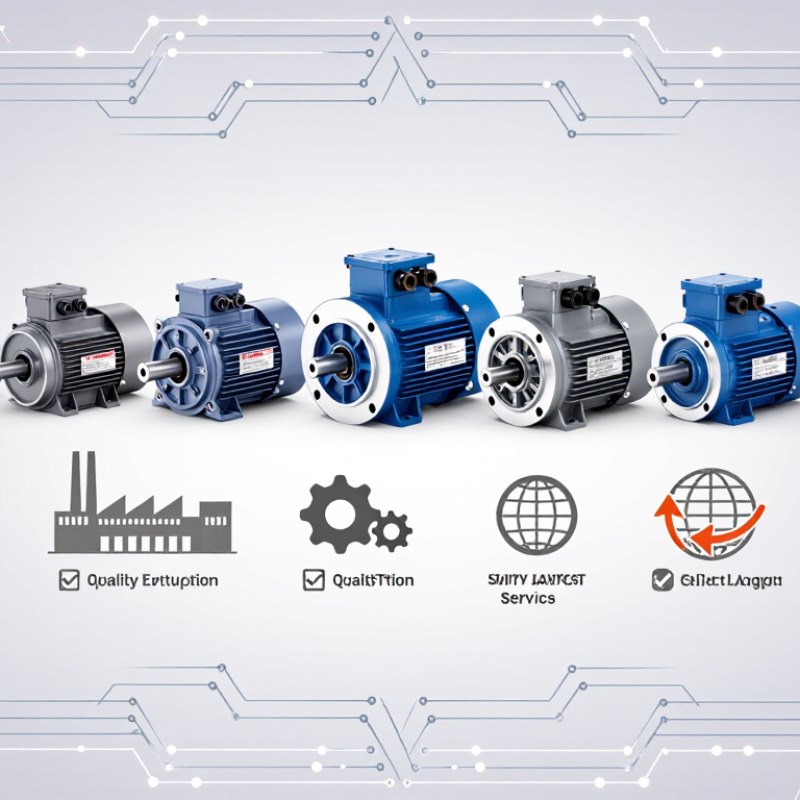
China Top 10 Low Voltage Motor Manufacturers?
For this comparison, low voltage means motors rated at or below 1,000 V, aligned with the practical scope used under IEC 60034-1. This boundary matters during equipment selection, because a 400 V three-phase motor serves different protection and installation needs than a medium-voltage unit. A reliable manufacturer should provide rated voltage, frequency, output, efficiency, power factor, insulation class, and temperature-rise data. Clear documents matter.
Factory evaluation should go beyond a polished catalog. Check winding processes, rotor balancing, bearing installation, and final-load testing. Ask for routine test records and applicable conformity documents. On a production line, small details are visible: uneven varnish, loose terminal screws, or excessive vibration can signal future trouble. Suppliers should also explain enclosure ratings, cooling methods, duty type, and permissible ambient temperature.
The “top 10” should not be chosen by export volume alone. Compare test capacity, traceability, customization control, delivery consistency, and after-sales response. A motor may meet its nameplate rating yet perform poorly with frequent starts or voltage fluctuations. That risk is easy to overlook. My own screening would give more weight to verified test data than attractive efficiency claims. No shortlist is perfect. Engineers should still confirm the actual load, starting method, operating cycle, and local compliance requirements before purchase.
China Top 10 Low Voltage Motor Manufacturers
GB 18613-2020 defines a practical compliance floor for many low-voltage motors in China. Its scope covers three-phase asynchronous motors from 0.12 to 1,000 kW, operating at 50 Hz. For covered products, IE3 efficiency is generally the minimum requirement. The boundary is easy to misread. Special designs, duty conditions, and excluded motor types still require technical review.
IEA 4E Motor Systems Annex reports that electric motor systems consume about 46% of global electricity. That figure explains why a small efficiency gain matters on a factory floor. A 75 kW motor running 6,000 hours yearly may lose thousands of kilowatt-hours through modest efficiency differences. Buyers comparing China’s top ten low-voltage motor manufacturers should request test reports, declared efficiency values, and traceable nameplate data. A clean catalog is not enough.
IEC 60034-30-1 provides the international IE classification framework, while GB 18613-2020 aligns Chinese market requirements with higher efficiency expectations. In practice, procurement teams should check rated speed, load profile, temperature rise, and inverter compatibility. IE3 is a starting line.
Not the finish line.
Some comparisons remain imperfect. Published efficiency data may use different test methods or operating assumptions. Independent verification is therefore worth the extra time, especially for motors running continuously beside pumps, fans, or compressors.
Ranking China’s top ten low-voltage motor manufacturers requires more than a factory list. I would begin with verified annual output, not advertised capacity. Production records, winding lines, test benches, and delivery data reveal operational strength. A plant shipping 50,000 motors consistently may deserve more trust than one claiming 200,000. Site visits matter. They expose gaps between brochures and daily practice. Still, output alone can reward volume over engineering.
Efficiency class should be checked by model, power range, and test method. IE3 and IE4 claims need traceable reports from accredited laboratories. Inspect no-load loss, temperature rise, vibration, and efficiency at partial load. These details affect pumps, fans, compressors, and factory conveyors. Certification evidence should include current management-system certificates and product approvals for destination markets. A logo on a website is not enough. Certificate scope and expiry dates deserve careful review.
Export performance adds a practical test of reliability. Compare shipment history, destination diversity, warranty records, and replacement-part response. Customs data can help, but it may be incomplete or misclassified. I would score stable repeat orders higher than one unusually large shipment. Technical support in the buyer’s language also matters. My ranking would combine output, verified efficiency, certification depth, and export consistency. The weighting remains debatable. A smaller producer with better testing may outperform a larger supplier over ten years.
Benchmark comparison by rated output and IEC efficiency class, without displaying company or brand data.
The chart shows reference full-load efficiencies for four-pole, 50 Hz low-voltage motors at selected rated outputs. IE4 represents a higher efficiency class than IE3 and can be used as a neutral technical indicator when assessing manufacturers alongside production capacity, certifications, export coverage, and product range. Values are rounded reference figures based on IEC 60034-30-1 efficiency-class tables.
China’s top ten low voltage motor manufacturers are best compared by product depth, testing discipline, and market reach. Their main lines include three-phase asynchronous motors, brake motors, explosion-protected models, high-efficiency units, and customized drives. Most serve industrial pumps, compressors, fans, conveyors, machine tools, and agricultural equipment.
In practical market ratings, the strongest manufacturers usually score highly for efficiency, insulation quality, bearing life, and delivery consistency. Several focus on IE2 and IE3 motors, while more advanced producers offer IE4 solutions for demanding energy-saving projects.
Some factories also provide aluminum-frame motors for lighter machinery and cast-iron models for harsh production sites. Certification matters. However, certification alone does not prove dependable field performance.
Core markets vary by manufacturer. Some concentrate on domestic factories and infrastructure projects. Others export widely across Southeast Asia, Europe, the Middle East, and Africa. Their advantages often include flexible voltage options, multilingual technical documents, and short customization cycles. Yet not every supplier manages after-sales service equally well. That is a real weakness. Buyers should inspect winding methods, vibration records, temperature-rise reports, and spare-parts support before choosing a supplier. A factory visit can reveal more than a polished catalogue. In my experience, the lowest quotation often hides weaker testing or slower technical response.
China Top 10 Low Voltage Motor Manufacturers?
IE3 and IE4 Efficiency Benchmarks Under IEC 60034-30-1
For a China top-ten low voltage motor shortlist, efficiency claims need technical checking. IEC 60034-30-1 defines IE3 as Premium Efficiency and IE4 as Super Premium Efficiency. The benchmark depends on rated power, pole count, frequency, and operating conditions. It is not a single percentage for every motor.
For example, a four-pole, 75 kW motor may reach 95.0% efficiency at IE3 and 96.1% at IE4. That small difference cuts calculated losses by about 22%. The number looks modest. The annual savings can become significant under continuous operation. The IEA’s Energy-Efficiency Policy Opportunities for Electric Motor-Driven Systems reports that motor-driven systems consume about 46% of global electricity. Industrial facilities therefore need more than a catalogue label.
Procurement teams should request test data based on IEC 60034-2-1, plus declared values at rated load, voltage, and frequency. Independent laboratory evidence is stronger than promotional language. IE4 is not always the best purchase. A lightly loaded motor, poor alignment, or unsuitable variable-speed drive can erase expected savings. Real projects are messier. I also question comparisons using different test conditions, because they can make similar motors appear unequal. Maintenance records, bearing temperature, vibration, and measured operating hours should support the final selection. The European Commission’s ecodesign assessments also show why lifecycle energy use deserves attention beyond the initial purchase price.
Compare verified output, efficiency, certifications, testing, exports, and after-sales support. Advertised capacity can mislead. Daily production evidence matters more.
Production records, winding lines, test benches, and shipment data show real operating strength. A factory shipping 50,000 units consistently may be more reliable.
No. Volume may reward manufacturing scale, not technical quality. A smaller producer with stronger testing could perform better over ten years.
Check efficiency by model and power range. Review no-load loss, temperature rise, vibration, and partial-load efficiency. These details affect pumps and conveyors.
Ask for traceable reports from accredited laboratories. Confirm the tested model matches the offered motor. Website claims are not enough.
Review certificate scope, expiry dates, management systems, and destination-market approvals. A displayed logo proves very little by itself.
Compare repeat shipments, destination diversity, warranty records, and replacement-part response. One large shipment may distort the picture. Customs data can also be incomplete.
Compare asynchronous, brake, high-efficiency, and customized motors. Aluminum frames suit lighter machinery; cast iron fits harsher sites. Voltage flexibility can simplify installation.
Inspect winding methods, test benches, vibration records, and temperature-rise controls. Look for actual work, not polished catalogues. Small gaps can matter.
Buyers may need local-language documents, troubleshooting, spare parts, or faster customization. Low prices sometimes hide slower technical responses. That risk deserves attention.
This guide explains how to evaluate China’s top 10 Low Voltage Motor manufacturers using clear technical and commercial criteria. It defines the low-voltage scope as motors rated at or below 1,000 V under IEC 60034-1 and highlights the requirements of GB 18613-2020, including the 0.12–1,000 kW range, 50 Hz operation, and IE3 minimum efficiency expectations. The ranking framework considers production capacity, motor power range, efficiency classes, quality certifications, export experience, customization ability, and application coverage.
The article also compares the product lines, performance ratings, and core markets of leading manufacturers without focusing on brand promotion. Special attention is given to IE3 and IE4 efficiency benchmarks under IEC 60034-30-1, helping readers understand energy-saving performance and lifecycle value. By combining technical compliance, manufacturing capability, reliability, and international service capacity, this overview provides a practical basis for selecting suitable low-voltage motors for industrial, commercial, and infrastructure applications.

Micprec Motor