 Micprec Motor
Top 10 Intelligent Motor Manufacturers for Global Buyers
Choosing an Intelligent Motor supplier is not a simple search for the lowest unit price. Global buyers need dependable torque, accurate sensing, efficient drives, and stable software. A motor may look impressive on a specification sheet, yet fail when dust, heat, vibration, or irregular maintenance enters the factory.
This guide examines ten leading Intelligent Motor manufacturers serving international markets. The comparison considers motor efficiency, integrated sensors, controller compatibility, cybersecurity practices, production capacity, warranty support, and field-service reach. It also considers practical details, such as how quickly a technician can replace a drive module or interpret an overload alarm. Professor Ned Mohan, a respected power-electronics scholar, expresses a useful principle: “Efficient power conversion is essential to modern electrification.” That principle matters here. Intelligence without efficient hardware can increase costs rather than reduce them.
Real factories are rarely perfect. Communication networks fail. Operators misunderstand dashboards. Some published performance data is difficult to compare because testing conditions differ. Therefore, this ranking should support research, not replace factory trials, reference checks, or technical audits. Buyers should request verified efficiency curves, sample units, software demonstrations, and clear after-sales terms before signing contracts.
The strongest manufacturers combine responsive control with durable engineering. They support predictive maintenance without creating unnecessary complexity. They also understand regional voltage standards, documentation needs, and service expectations. For global buyers, that balance can matter more than a flashy feature list. The best choice depends on the application, production environment, and long-term operating discipline. There is no universal winner.
Why Intelligent Motors Matter: IEA Estimates Motors Use About 46% of Electricity
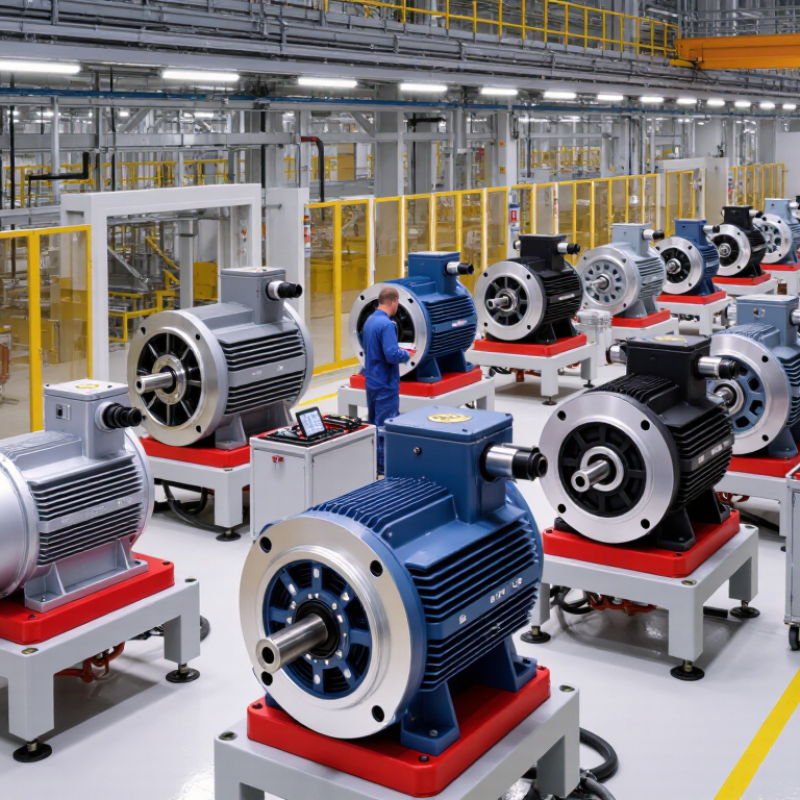
For global buyers, the top 10 intelligent motor manufacturers should be judged beyond price and rated output. The International Energy Agency estimates that electric motors consume about 46% of global electricity. This figure changes the purchasing discussion. A small efficiency gain can reduce thousands of operating hours, especially in pumps, fans, compressors, and conveyors. It also lowers heat inside crowded production rooms.
Intelligent motors combine high-efficiency designs with sensors, variable-speed control, and network connectivity. The IEC 60034-30-1 standard provides a useful framework for comparing motor efficiency classes. Meanwhile, the U.S. Department of Energy reports that motor-driven systems represent a major share of industrial electricity use. Buyers should therefore examine full lifetime cost, not only the invoice. A cheaper motor may become expensive through energy losses, maintenance visits, or poor load matching. I would not pretend every smart feature creates value. Some factories still lack clean data, trained technicians, or reliable network coverage.
Tips: Request measured efficiency at your real operating load. Check compatibility with drives and control systems. Ask for sensor accuracy, cybersecurity documentation, spare-parts availability, and service response times. Trial one motor on a critical line before wider deployment. Record vibration, temperature, energy use, and downtime for several weeks. This evidence is more useful than a polished brochure. The IEA and the U.S. DOE both emphasize system-level efficiency, yet buyers often compare motors as isolated products. That remains a practical mistake.
FAQS
Motors consume a large share of global electricity. Even small efficiency gains can reduce costs across thousands of operating hours. They also reduce heat in crowded production rooms.
Intelligent motors may include sensors, variable-speed control, and network connectivity. They can report temperature, vibration, torque, and energy use. Useful data matters more than a long feature list.
No. Energy losses, maintenance visits, integration work, and poor load matching affect lifetime cost. A cheaper motor may become expensive later. The invoice is only one piece.
Request efficiency data at the actual operating load. Test the motor with its intended pump, fan, compressor, or conveyor. Rated efficiency alone may not reflect daily performance.
Check compatibility with drives, controllers, production software, and warehouse platforms. Confirm communication protocols before installation. Integration labor is easy to underestimate.
Test one motor on a critical production line. Record vibration, temperature, energy use, and downtime for several weeks. Real measurements beat polished brochures. Sometimes the results disappoint.
Not necessarily. A large supplier may offer broad compatibility but slower customization. A smaller specialist may respond faster but lack regional service coverage. The best fit depends on the factory.
Ask about spare parts, service response times, training, remote diagnostics, warranties, and repair procedures. Check local inventory and engineering support. A delayed replacement can stop production for days.
Conclusion
Intelligent Motor technology is becoming essential as electric motors consume an estimated 46% of global electricity. For manufacturers and system integrators, selecting the right motor now involves more than comparing rated power. IE3, IE4, and IE5 efficiency classes provide a useful framework for reducing energy consumption, operating costs, and environmental impact, while advanced automation features improve performance, reliability, and production flexibility.
This overview evaluates ten leading categories of Intelligent Motor manufacturers by automation capability, international market reach, and technical development. It compares key specifications such as power range, torque, connectivity, integrated sensors, control compatibility, and IP protection ratings. For global buyers, the final decision should also consider IEC compliance, 50/60 Hz compatibility, total lifecycle cost, maintenance requirements, spare-parts availability, commissioning support, and long-term service coverage. A balanced assessment of efficiency, intelligence, durability, and support can help organizations choose motors that deliver dependable value across diverse industrial applications.
