Choosing the right High Torque Motor begins with understanding the machine, not the product label. A motor that looks powerful may still fail under continuous load. The real question is simple: how much torque is needed, and for how long?
Start by measuring the load at the shaft. Include friction, acceleration, incline, and any sudden resistance. A conveyor carrying heavy boxes needs different performance from a robotic joint moving slowly. Record the required speed, voltage, duty cycle, and available installation space. These details often reveal problems before purchase.
Peak torque is not the same as continuous torque. Check both values in the manufacturer’s technical data. Also examine thermal limits, gearbox efficiency, startup current, and control compatibility. A suitable High Torque Motor should operate reliably without overheating after repeated cycles. In dusty, wet, or vibrating environments, enclosure protection matters too.
Field experience shows that many selection errors come from trusting advertised torque alone. That approach is tempting, but incomplete. Sometimes a smaller motor with proper gearing performs better than a larger, inefficient model. However, gear reduction can introduce backlash, noise, and maintenance needs. Engineers should compare the full system, not only the motor body.
Testing matters. Mount the motor under a realistic load and monitor temperature, speed stability, and current draw. Leave a sensible safety margin. Do not oversize without reason, because excess capacity can increase cost and energy use. The best choice balances torque, control, durability, efficiency, and service support. A careful decision today can prevent an expensive redesign later.
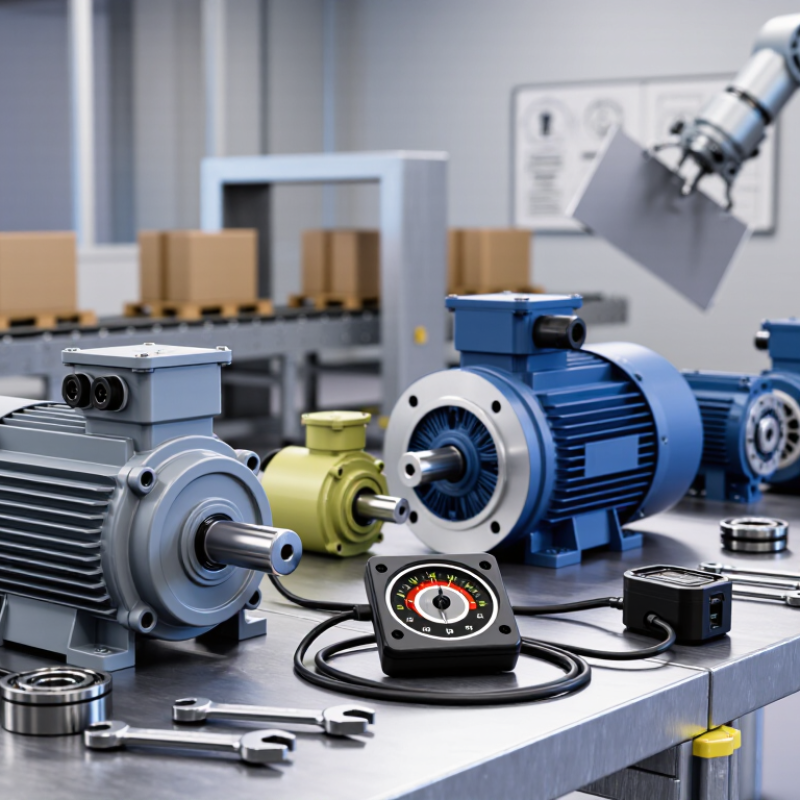
Understanding High Torque Motors and Their Core Operating Principles
Choosing a high torque motor starts with understanding how torque is produced. Torque is rotational force at the shaft. It turns a load, even when that load resists movement. Inside the motor, magnetic fields create force between stationary and rotating components. The controller changes current direction, keeping the rotor moving. More current usually creates more torque, but heat rises too. This trade-off is easy to underestimate. A motor that feels powerful for ten seconds may overheat during continuous operation. Check rated torque, peak torque, speed, voltage, and duty cycle together. Never judge performance from torque alone.
Tips: Begin with the load, not the motor. Measure starting resistance, working speed, shaft size, and operating time. Add a safety margin, but avoid excessive oversizing. A larger motor may consume more energy and respond less smoothly. Confirm the controller can supply the required current. If possible, test the motor under real load. Bench results can be misleading.
High torque motors commonly use electromagnetic attraction and repulsion to create rotation. Their output depends on current, magnetic strength, winding design, and mechanical efficiency. Gear reduction can increase shaft torque, but it also reduces speed and adds losses. This detail matters in conveyors, lifting mechanisms, and positioning equipment. Real systems are rarely perfectly balanced. Friction changes with temperature, alignment, and lubrication. A specification sheet may look convincing, yet the motor may struggle during startup. Recheck the calculation with actual load data. When uncertain, measure temperature after a full operating cycle.
Matching Torque, Speed, and Power Requirements to the Application
Choosing the right high torque motor starts with the application, not the catalog headline. Define the required load torque, operating speed, and duty cycle. A motor may deliver impressive peak torque but struggle under continuous load. Measure the real resistance, including friction, startup force, and sudden changes in load. Then calculate mechanical power using torque multiplied by angular speed. Higher speed can reduce available torque, so both values must be checked together.
The motor should also handle acceleration and stopping without excessive heat. Consider rotating inertia, gearbox efficiency, ambient temperature, and available voltage. A practical design usually includes a modest safety margin, but an oversized motor can waste energy and increase cost. In testing, temperature rise often reveals problems that calculations miss. This is where careful monitoring matters. My first estimate would not always be correct.
Tips: Record torque and speed during the hardest operating cycle. Compare continuous torque with peak torque separately. Check whether the motor can maintain speed when the load changes. Allow space for cooling and inspect the controller’s current limit. If a gearbox is used, include its reduction ratio and efficiency in every calculation. Short tests can mislead. Run the motor long enough to reach a stable working temperature. Feedback from an encoder may also improve speed control, especially when the load varies.
How to Choose the Right High Torque Motor? - Matching Torque, Speed, and Power Requirements to the Application
| Application Profile |
Typical Load Requirement |
Recommended Motor Type |
Continuous Torque |
Peak Torque |
Motor Speed |
Approx. Mechanical Power |
Typical Reduction Ratio |
Estimated Output Torque |
Estimated Output Speed |
Key Selection Considerations |
| Compact rotary actuator |
Positioning valves, indexing mechanisms, light-duty rotary axes |
Brushless DC or servo motor |
1.0 N·m |
2.0 N·m |
3,000 rpm |
314 W |
10:1 |
9.0 N·m |
300 rpm |
Prioritize low rotor inertia, accurate feedback, and adequate peak torque for acceleration. |
| Small conveyor drive |
Continuous material transport with moderate starting loads |
Induction motor with gearbox or brushless DC motor |
5.0 N·m |
10.0 N·m |
1,500 rpm |
785 W |
20:1 |
90 N·m |
75 rpm |
Check belt or chain tension, starting torque, duty cycle, and the gearbox service factor. |
| Robotic joint |
Repeated acceleration, deceleration, and holding of articulated loads |
Servo motor with precision planetary or harmonic gearing |
20 N·m |
40 N·m |
750 rpm |
1.57 kW |
50:1 |
900 N·m |
15 rpm |
Evaluate reflected inertia, backlash, positioning accuracy, thermal limits, and intermittent peak torque. |
| Electric screw or linear actuator |
High axial force generated through a ball screw or lead screw |
Servo motor with screw-drive transmission |
10 N·m |
18 N·m |
1,000 rpm |
1.05 kW |
10:1 equivalent |
90 N·m |
100 rpm |
Convert required linear force to torque using screw lead and efficiency; verify buckling and back-driving behavior. |
| Heavy-duty rotary table |
Slow, controlled rotation of fixtures, tooling, or large workpieces |
AC servo or permanent-magnet synchronous motor |
50 N·m |
100 N·m |
120 rpm |
628 W |
40:1 |
1,800 N·m |
3 rpm |
Account for table inertia, eccentric loads, bearing friction, positioning accuracy, and continuous thermal dissipation. |
| Hoist or lifting mechanism |
Vertical lifting with high static and transient loads |
Brake-equipped induction or servo motor with hoist gearbox |
100 N·m |
200 N·m |
300 rpm |
3.14 kW |
40:1 |
3,600 N·m |
7.5 rpm |
Use a fail-safe brake, verify holding torque, include acceleration loads, and follow applicable lifting safety requirements. |
Comparing Motor Types, Drive Systems, and Control Options
Choosing a high-torque motor starts with the load, not the nameplate.
Induction motors are rugged and cost-effective for conveyors, crushers, and pumps. Permanent-magnet motors offer higher torque density and efficiency, but require careful thermal design. Servo motors suit fast acceleration and precise positioning. They can be excessive for a slow, continuously loaded machine.
The drive system changes the result.
A gearbox increases output torque but adds backlash, lubrication needs, and mechanical losses. Direct-drive motors remove those parts, yet demand a larger motor and stronger bearings.
A variable-frequency drive can control induction motors economically. Vector control improves low-speed torque. Field-oriented control provides smoother response, especially when speed changes quickly. Closed-loop feedback is valuable when the shaft must hold position under changing loads.
Control selection deserves practical testing.
The International Energy Agency’s Energy Efficiency 2023 report states that motor-driven systems consume roughly half of global electricity. The U.S. Department of Energy also reports that optimized motor and drive systems can achieve energy savings of 20% to 50% in suitable applications.
Measure acceleration time, peak current, temperature, and vibration before choosing. A motor that survives a brief overload may still overheat during repeated cycles. This is often missed.
Oversizing can reduce efficiency, while undersizing causes nuisance trips and shortened insulation life. Leave room for uncertainty. Real loads rarely match the spreadsheet perfectly.
Evaluating Efficiency, Duty Cycle, Environment, and Mounting Constraints
Choosing the right high torque motor starts with the real load, not a catalog headline. Measure starting torque, running torque, speed, and acceleration at the shaft. A motor that only meets peak torque may overheat during continuous operation. Check efficiency across the working speed range, not at one ideal test point. Even a small efficiency loss can create significant heat inside a compact enclosure.
Duty cycle strongly affects motor selection. A motor running for ten seconds every minute faces different thermal demands than one operating continuously. Record the on-time, rest-time, load pattern, and number of daily cycles. Then compare these conditions with the motor’s continuous and intermittent ratings. This step is often skipped. It should not be.
Real conditions matter.
Dust, moisture, vibration, and ambient temperature can change performance quickly. Select suitable protection and allow extra thermal margin when airflow is limited. For outdoor equipment, consider condensation and corrosion around connectors and fasteners. Mounting constraints deserve equal attention. Check the shaft diameter, bolt pattern, cable exit, allowable overhung load, and available cooling space. A motor may fit the drawing but fail after installation because the shaft coupling adds excessive side force. Leave room for alignment tools and maintenance access. Small errors matter. Verify the final choice with a prototype test under the actual load, temperature, and duty cycle. The first calculation is useful, but rarely perfect.
How to Choose the Right High Torque Motor?
Evaluating efficiency, duty cycle, environment, and mounting constraints
The chart shows representative efficiency ranges at rated load for common high-torque motor technologies. Actual efficiency depends on motor size, speed, load, controller losses, and operating temperature. For continuous applications, verify RMS torque and thermal capacity; for intermittent applications, verify peak torque, duty cycle, cooling time, environmental protection, and available mounting space.
Selecting a Motor Through Testing, Specifications, Cost, and Maintenance Needs
Choosing the right high torque motor begins with testing, not advertising claims. Mount the motor on a fixture that matches the real machine. Apply the expected load, then test startup, continuous operation, and sudden resistance. Record torque, speed, current, temperature, vibration, and noise. Test under heat. A short laboratory trial can expose winding stress or unstable control. Peak torque misleads. I once selected a motor using its maximum rating and ignored its duty cycle. It overheated during repeated lifting, forcing a costly redesign.
Specifications should reflect the application’s actual demands. Compare continuous torque with starting torque, rated speed, voltage, efficiency, and allowable operating temperature. Check the motor’s duty cycle and overload duration. A larger motor may deliver strength but waste energy and space. Confirm shaft size, mounting dimensions, feedback requirements, and controller compatibility before ordering. Small details matter. Ask whether the stated torque applies at the required speed, because torque often falls as speed rises.
Cost includes more than the purchase price. Calculate energy use, control equipment, installation labor, spare parts, and expected downtime. A cheaper motor can become expensive when replacement bearings arrive slowly. Maintenance needs deserve equal attention. Choose accessible lubrication points, sealed components, replaceable bearings, and clear service instructions. Keep inspection records for temperature and vibration trends. Service access matters. If technicians must remove half the machine, routine checks may be skipped. That practical weakness should influence the final selection.
FAQS
Torque is rotational force at the shaft. It helps turn a resistant load. More current usually creates more torque, but heat rises.
Measure starting resistance, working speed, shaft size, and operating time. A nameplate alone cannot describe the real machine.
Not always. Peak torque may last briefly, while continuous torque supports longer operation. A ten-second test can hide overheating.
Compare rated torque, peak torque, speed, voltage, current, and duty cycle together. Torque alone is an incomplete answer.
A gearbox increases shaft torque and reduces speed. It also adds backlash, lubrication needs, mechanical losses, and possible alignment problems.
Direct drive removes gearbox losses and backlash. However, it may require a larger motor, stronger bearings, and more careful design.
Servo motors suit fast acceleration and accurate positioning. They may be excessive for slow machines carrying steady loads.
Test the motor under its real load when possible. Record acceleration time, peak current, temperature, and vibration after a full cycle.
A larger motor may consume more energy and respond less smoothly. My first estimate may be wrong, so practical testing matters.
Add a sensible safety margin, not an enormous one. Real loads change with friction, temperature, alignment, and lubrication. Allow room for doubt.
Conclusion
Choosing the right High Torque Motor begins with understanding how torque, speed, and power work together to meet an application’s demands. Torque determines the motor’s ability to handle resistance, while speed affects operating performance and power consumption. Consider whether the application requires steady rotation, frequent starting and stopping, precise positioning, or variable speed control. Different motor designs, drive systems, and control methods offer distinct advantages, so the selection should match the required motion, response, and control accuracy.
A complete evaluation should also include efficiency, duty cycle, operating temperature, dust or moisture exposure, available space, and mounting limitations. Before making a final decision, compare technical specifications, conduct practical testing when possible, and assess total ownership costs rather than purchase price alone. Maintenance requirements, expected service life, replacement access, and energy use can strongly influence long-term value. By balancing performance, environmental conditions, reliability, and budget, users can select a motor that delivers dependable torque and supports efficient operation.
 Micprec Motor
