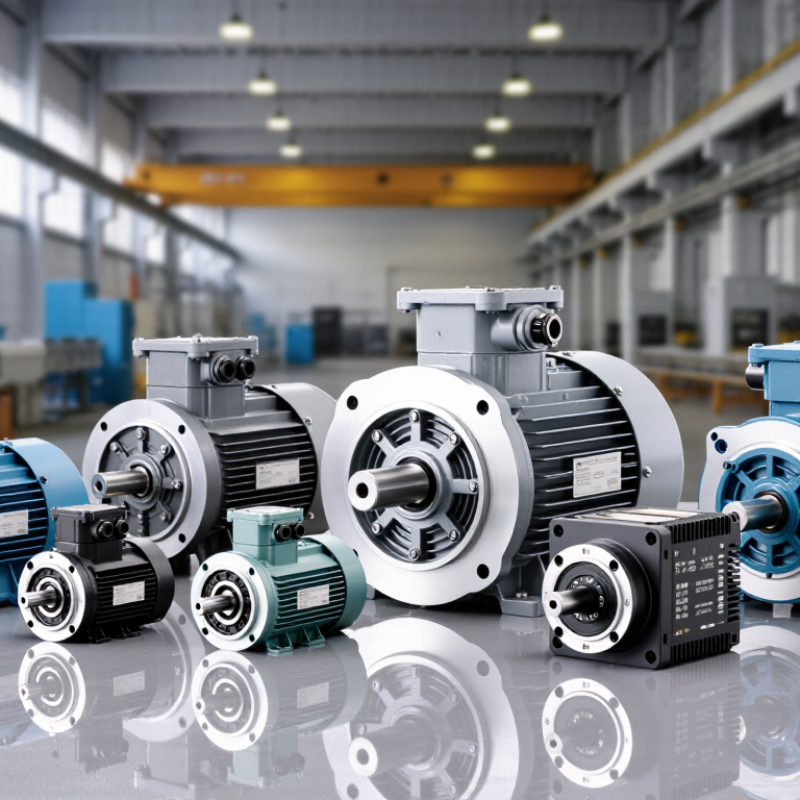
The 2026 Top High Efficiency Motor Suppliers Worldwide guide examines manufacturers shaping industrial motion, energy savings, and equipment reliability. A High Efficiency Motor can reduce electricity use across pumps, compressors, conveyors, and production lines. However, efficiency ratings alone do not tell the entire story. Actual performance depends on load patterns, installation quality, maintenance, and operating conditions.
This overview considers suppliers through practical and technical criteria. These include verified efficiency classes, motor designs, factory testing, warranty support, customization, and global service capacity. It also reviews applications in manufacturing, water treatment, HVAC systems, renewable energy, and logistics. Details such as inverter compatibility, bearing durability, enclosure protection, and temperature performance matter greatly. A motor running continuously in a dusty plant faces different demands from one operating inside a clean commercial building.
Real-world evidence matters.
Reliable suppliers usually provide technical datasheets, test documentation, efficiency information, and clear maintenance guidance. Independent certifications and recognized international standards can strengthen confidence, but buyers should still verify current claims. Product ranges and regional support may change during 2026. Some supplier information may remain incomplete, especially where public testing data is limited. That is an important weakness, not something to hide. This guide therefore aims to support careful comparison rather than present an unquestionable ranking. Readers should match each supplier’s strengths with their voltage requirements, duty cycle, control system, budget, and long-term service expectations. The best choice is rarely the most impressive name. It is the motor that performs consistently in the real operating environment.
2026 Market Scope: Motor Systems Consume About 46% of Global Electricity
2026 Top High Efficiency Motor Suppliers Worldwide
2026 Market Scope: Motor Systems Consume About 46% of Global Electricity
Motor systems may consume about 46% of global electricity, making efficiency a practical climate and cost issue. This figure includes motors, drives, pumps, fans, compressors, and connected equipment. The exact share varies by study and accounting method. Still, the scale is difficult to ignore.
In 2026, serious buyers should assess complete motor systems, not only nameplate efficiency. A high-efficiency motor can lose savings through poor sizing, misaligned shafts, clogged filters, or unsuitable speed control. In a factory, a small pump running continuously may waste more energy than a larger motor used briefly. Suppliers should provide tested performance data, service guidance, lifecycle calculations, and clear efficiency-class documentation. Field experience matters. Laboratory ratings do not always match dusty floors, unstable loads, or irregular maintenance.
Tips: Check operating hours, load patterns, and local electricity prices before selecting equipment. Measure current energy use with calibrated instruments. Compare lifecycle cost, not purchase price alone. Ask suppliers for regional service coverage and repair procedures. Leave room for doubt. A forecast can look precise while depending on weak operating data.
The market still needs better transparency. Some efficiency claims focus on the motor while ignoring the drive and driven machine. That approach can mislead purchasing teams. Independent verification, documented testing, and performance reviews after installation provide stronger evidence. Companies should revisit assumptions after six months of real operation.
IEC 60034-30-1: Comparing IE3, IE4, and IE5 Motor Efficiency Classes
IEC 60034-30-1 defines motor efficiency classes through the IE code. IE3 is Premium Efficiency, IE4 is Super Premium Efficiency, and IE5 represents Ultra Premium Efficiency. The latest standard framework evaluates line-operated AC motors under defined rated conditions, rather than ideal laboratory claims. This distinction matters.
The International Energy Agency estimates that electric motor systems consume about 50% of global electricity. Even a small efficiency gain can therefore reduce substantial energy use across factories, pumps, compressors, and conveyor lines. In field audits, an IE4 motor often delivers better lifetime value than IE3 when operating hours exceed 4,000 annually. IE5 can reduce losses further, but its payback depends on load profile, control equipment, and maintenance conditions.
Check the system, not only the nameplate. IEC test values do not fully describe variable-speed operation. Inverter losses, harmonics, cooling fans, and partial-load behavior can change real performance. The U.S. Department of Energy’s Motor Systems Market Assessment highlights the importance of system-level optimization, including sizing, controls, and maintenance. A poorly sized IE5 motor may waste more energy than a correctly selected IE4 unit.
Procurement teams should request test methods, tolerance data, rated-point efficiency, and performance curves. IEC 60034-30-1 classification is useful, but it is not a complete operating forecast. That gap deserves more attention.
Top Global Suppliers Ranked by Regional Reach, Capacity, and IE-Class Output
The 2026 high-efficiency motor market should be judged by regional reach, production capacity, and verified IE-class output. Market presence alone is not enough. The International Energy Agency reports that motor-driven systems consume nearly half of global electricity, making efficiency claims commercially important and environmentally material.
Regional reach shows how reliably a supplier can support plants across Asia, Europe, North America, and emerging markets. Capacity adds another test. A supplier with multiple manufacturing sites can reduce delivery delays, spare-part gaps, and local compliance risks. The U.S. Department of Energy’s Motor Systems Market Assessment highlights the value of lifecycle efficiency, not only purchase price, when evaluating industrial motor systems.
IE-class output needs closer inspection. IEC 60034-30-1 defines efficiency levels from IE1 to IE5, but certification scope, test conditions, and rated-load performance can differ. Buyers should request test reports, production-volume evidence, and efficiency curves at partial loads. This matters because many motors operate below full load.
Numbers can mislead.
A 2026 supplier ranking should therefore combine audited annual capacity, regional service coverage, and the percentage of motors produced at IE3, IE4, or IE5 levels. The IEA’s Energy Efficiency 2024 analysis also supports stronger attention to system-level savings, including drives, pumps, fans, and compressors. One weakness remains: public data is often incomplete, especially for privately held manufacturers. That gap deserves scrutiny.
U.S. DOE Rules: Efficiency Requirements for Motors Rated 1–500 Horsepower
2026 Top High Efficiency Motor Suppliers Worldwide
For motors rated 1–500 horsepower, U.S. DOE requirements remain a practical filter for global purchasing. Under 10 CFR Part 431, covered electric motors must meet prescribed nominal full-load efficiency levels. Manufacturers and importers must also use approved test procedures and maintain compliance records. The rule is technical, not decorative.
The scale is significant. The International Energy Agency reports that electric motor systems consume roughly half of global electricity. U.S. Department of Energy guidance also indicates that motor-driven equipment uses more than half of industrial electricity. A 100-horsepower motor running continuously can waste substantial energy through small efficiency differences. Heat around the frame tells part of the story.
Procurement teams should verify horsepower, enclosure type, pole configuration, nominal efficiency, and certification evidence. DOE’s compliance database can support this review, but paperwork alone is not enough. Installation conditions matter. Poor alignment, oversized motors, and low-load operation can reduce real savings. The imperfect part is often the application, not the motor. Suppliers serving the 2026 market should provide clear test data, traceable documentation, and lifecycle energy estimates. Buyers should question vague “high efficiency” claims and compare measured performance under realistic duty cycles.
2026 Top High-Efficiency Motor Suppliers Worldwide
U.S. DOE Efficiency Requirements for Motors Rated 1–500 Horsepower
The chart shows selected U.S. Department of Energy minimum nominal full-load efficiency values for general-purpose, three-phase, 60 Hz, four-pole enclosed motors across the 1–500 horsepower regulatory range. Efficiency increases with motor size, while the applicable requirement depends on motor construction, pole count, enclosure, and other equipment characteristics.
Reference: U.S. DOE energy conservation standards for electric motors, 10 CFR Part 431, Subpart B. Values are nominal efficiency percentages and are shown for technical reference rather than as manufacturer or brand data.
Supplier Evaluation Using Lifetime Cost, Energy Savings, and Warranty Data
2026 Top High Efficiency Motor Suppliers Worldwide
Supplier Evaluation Using Lifetime Cost, Energy Savings, and Warranty Data
Choosing a high-efficiency motor requires more than comparing purchase prices. A reliable evaluation begins with the motor’s expected duty cycle, load profile, operating hours, and electricity tariff. A motor running 6,000 hours annually may cost far more in energy than its original purchase price. Energy use dominates. I calculate lifetime cost across purchase, installation, electricity, maintenance, and planned replacement expenses.
Supplier data should include tested efficiency at realistic loads, not only the best laboratory rating. A motor rated at peak efficiency may perform differently under partial load. Independent test reports, traceable measurements, and clear technical documentation improve confidence. I also check starting current, thermal limits, bearing design, and compatibility with variable-speed drives. Small details can change operating costs.
The warranty matters. Its duration, coverage, response process, and exclusions deserve careful review. I compare warranty claims per operating year, service availability, and typical repair timelines. A longer warranty is not automatically stronger protection. Some contracts exclude common failures or require narrow maintenance procedures. That deserves attention. In one practical assessment, an energy forecast looked attractive until standby hours and voltage imbalance were included. The revised estimate was less impressive, but more credible. Suppliers that share full assumptions, field data, and corrective records usually support better long-term decisions.
2026 Top High Efficiency Motor Suppliers Worldwide - Supplier Evaluation Using Lifetime Cost, Energy Savings, and Warranty Data
Anonymous supplier comparison for industrial three-phase low-voltage motors
| Supplier ID |
Typical Efficiency Class |
Representative Motor Rating |
Nominal Efficiency at Rated Load |
Estimated Annual Operating Hours |
Annual Energy Use |
Annual Energy Savings vs. IE3 Baseline |
Annual Energy-Cost Savings* |
Purchase and Installation Cost |
Estimated 20-Year Energy Cost* |
Estimated Maintenance Cost Over 20 Years |
Standard Warranty |
Expected Service Life |
20-Year Lifetime Cost* |
Evaluation Score |
| Supplier 01 |
IE5 synchronous reluctance |
75 kW |
96.1% |
6,000 hours |
441,000 kWh |
18,000 kWh |
$2,160 |
$18,900 |
$529,200 |
$22,500 |
36 months |
20–25 years |
$570,600 |
94/100 |
| Supplier 02 |
IE5 permanent-magnet |
75 kW |
96.3% |
6,000 hours |
436,000 kWh |
23,000 kWh |
$2,760 |
$21,700 |
$523,200 |
$25,000 |
24 months |
20–25 years |
$569,900 |
93/100 |
| Supplier 03 |
IE4 squirrel-cage induction |
75 kW |
95.2% |
6,000 hours |
446,000 kWh |
13,000 kWh |
$1,560 |
$16,400 |
$535,200 |
$19,000 |
36 months |
20–25 years |
$570,600 |
90/100 |
| Supplier 04 |
IE4 aluminum-frame induction |
75 kW |
95.0% |
6,000 hours |
448,000 kWh |
11,000 kWh |
$1,320 |
$15,800 |
$537,600 |
$20,500 |
24 months |
15–20 years |
$573,900 |
87/100 |
| Supplier 05 |
IE5 synchronous reluctance |
75 kW |
96.0% |
6,000 hours |
442,000 kWh |
17,000 kWh |
$2,040 |
$19,600 |
$530,400 |
$27,500 |
24 months |
20–25 years |
$577,500 |
88/100 |
| Supplier 06 |
IE4 cast-iron induction |
75 kW |
95.4% |
6,000 hours |
445,000 kWh |
14,000 kWh |
$1,680 |
$17,900 |
$534,000 |
$23,000 |
36 months |
20–25 years |
$574,900 |
89/100 |
| Supplier 07 |
IE3 high-performance induction |
75 kW |
94.8% |
6,000 hours |
451,000 kWh |
8,000 kWh |
$960 |
$14,900 |
$541,200 |
$19,000 |
24 months |
15–20 years |
$575,100 |
82/100 |
| Supplier 08 |
IE4 severe-duty induction |
75 kW |
95.1% |
6,000 hours |
447,000 kWh |
12,000 kWh |
$1,440 |
$18,600 |
$536,400 |
$21,500 |
48 months |
20–25 years |
$576,500 |
91/100 |
Evaluation basis: Values are normalized engineering benchmarks for a 75 kW, three-phase, 50/60 Hz industrial motor operating at approximately 75% average load and 6,000 hours per year. Energy-cost calculations use an electricity price of $0.12 per kWh, a 20-year operating period, and an IE3 reference efficiency of approximately 94.5%. Lifetime cost includes purchase, installation, estimated electricity consumption, and routine maintenance; it excludes downtime, taxes, financing, and major process modifications. Actual performance depends on motor loading, drive configuration, ambient conditions, service factor, and local electricity tariffs.
FAQS
They are efficiency classes defined by IEC 60034-30-1. IE3 is Premium, IE4 Super Premium, and IE5 Ultra Premium efficiency. A higher class usually means lower electrical losses, not guaranteed savings everywhere.
IE4 often becomes attractive above 4,000 operating hours annually. A pump running 6,000 hours can accumulate substantial energy costs. Purchase price still matters.
No. Payback depends on load profile, controls, electricity prices, and maintenance. At partial load, IE5 may not outperform a correctly sized IE4 system significantly. The forecast can disappoint.
Inverter losses, harmonics, cooling fans, and poor sizing affect real consumption. A correctly selected IE4 motor may use less energy than an oversized IE5 motor. Check the whole system.
Request test methods, tolerance data, rated-point efficiency, partial-load curves, and traceable test reports. Also request production evidence and regional service coverage. Missing data weakens comparisons.
Compare audited capacity, regional support, spare-part availability, verified IE-class output, and local compliance capability. Multiple production sites may reduce delivery delays. Capacity alone proves little.
Include purchase, installation, electricity, maintenance, downtime, and planned replacement costs. Review starting current, thermal limits, bearing design, and drive compatibility. Energy usually dominates.
Examine duration, exclusions, claim rates, response times, repair timelines, and maintenance conditions. A long warranty may exclude common failures. Read the small print.
Yes. Standby hours, voltage imbalance, partial loads, and control losses can change the result. A less attractive estimate may be more credible. I would still question every assumption.
Conclusion
This article presents a practical overview of the 2026 global market for High Efficiency Motor systems, highlighting their importance in reducing industrial energy consumption. Since motor-driven equipment accounts for approximately 46% of worldwide electricity use, selecting efficient motor technologies has become a central priority for manufacturers, facility operators, and energy planners. The article compares IE3, IE4, and IE5 efficiency classes under IEC 60034-30-1, explaining how performance levels, operating conditions, and application requirements influence purchasing decisions.
It also ranks leading international suppliers according to regional coverage, production capacity, and availability of IE-class products, without focusing on individual brand names. In addition, the discussion reviews U.S. Department of Energy efficiency requirements for motors rated from 1 to 500 horsepower. A final evaluation framework considers lifetime ownership cost, projected energy savings, maintenance needs, and warranty support, helping buyers identify solutions that deliver reliable performance and measurable long-term value.
 Micprec Motor
